
Open-Access Rail: Is Your Locomotive Fleet Ready?
Published by Donald Mc Bride | 19 October 2026
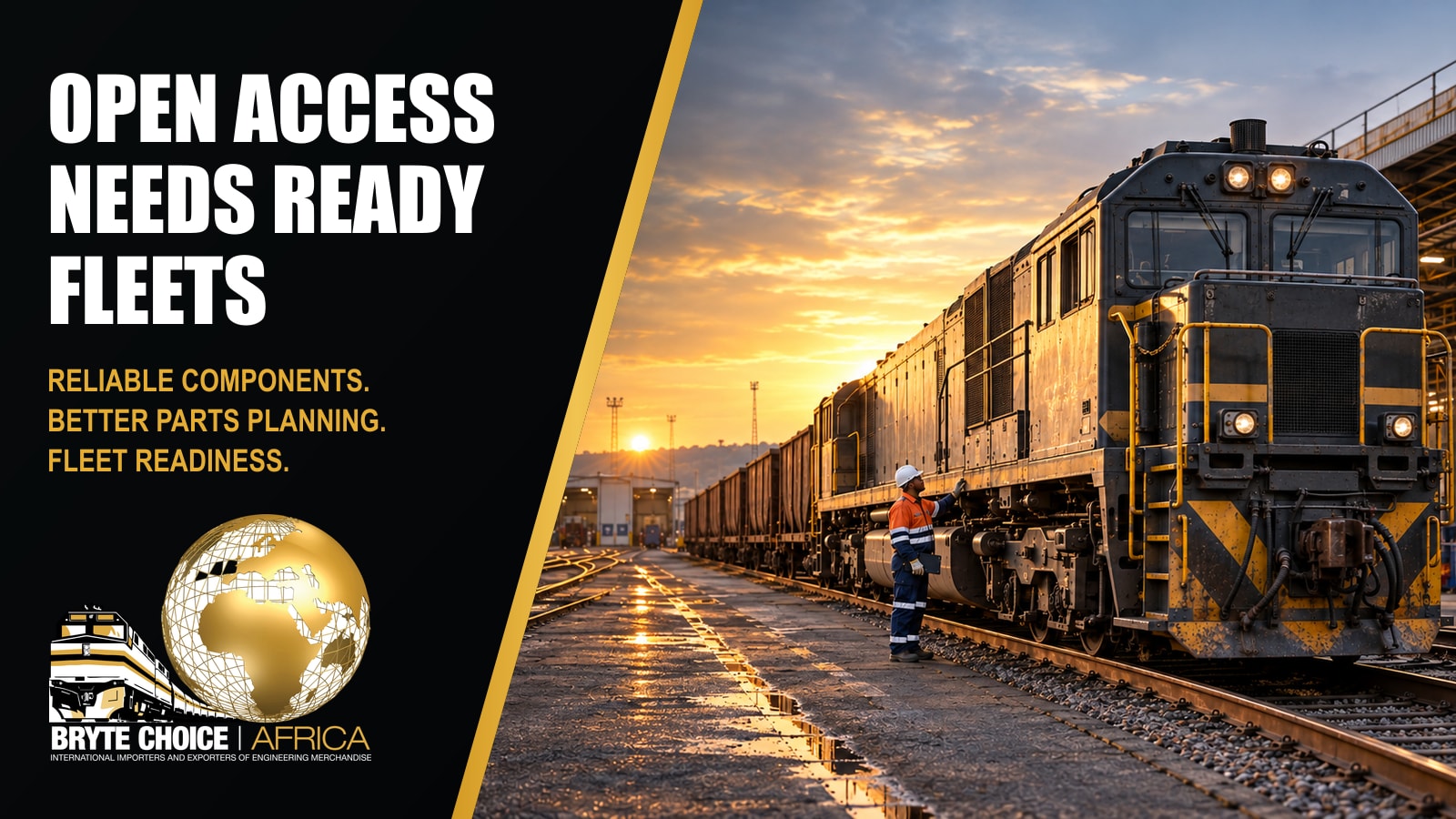
South Africa’s freight rail market is entering a new phase. Open access is moving from policy into implementation, private operators are preparing to join the national network, and the country’s appetite for rail freight is substantially larger than current volumes.
That creates a major opportunity. It also raises a practical question: will enough locomotives be ready to move the additional freight?
For train operators, workshops and procurement teams, growth will depend on more than access to the network. It will depend on fleet availability, disciplined maintenance and dependable access to the correct diesel-electric locomotive components.
Speak to a Locomotive Parts Specialist
If you are looking for a reliable supplier of locomotive components or traction motor parts, our team can assist with identifying the right solutions for your operational requirements.
A larger, more competitive rail market is taking shape
In March 2026, South Africa approved the first 11 private Train Operating Companies to access the national freight rail network. Operations are expected to begin on 1 April 2027, and these operators plan to move up to 24 million tonnes of freight a year.
The longer-term opportunity is even larger. According to the Draft National Rail Master Plan, approximately 165 million tonnes of freight currently move by rail each year, while estimated market appetite is closer to 280 million tonnes. Closing even part of that gap will require more capacity, better utilisation and reliable rolling stock.
This changes the market for every organisation connected to rail. New operators must prepare fleets and supply chains. Existing operators must improve reliability and compete on service. Workshops and procurement teams must plan for greater maintenance demand while controlling lead times, cost and quality.
Rail growth depends on locomotives that are available for service
The latest Transnet Freight Rail results show that recovery is already underway. Freight volumes increased by 4.87% to 167.87 million tonnes in the 2025/26 financial year. During the same period, 106 long-standing locomotives were returned to service.
The report also makes the remaining challenge clear: locomotive, network and security constraints continue to affect performance. It identifies improved locomotive availability, long-term maintenance and repair agreements, fleet modernisation and the return of long-standing locomotives as important priorities.
For an operating team, this means the next phase of rail growth will be won partly in the workshop and the supply chain. A train path creates an opportunity, but a serviceable locomotive converts that opportunity into tonnes moved and revenue earned.
Five questions for a fleet-readiness review
Operators and workshops preparing for higher utilisation should begin with five practical questions.
1. Do we know which components create the greatest downtime risk?
Not every spare has the same operational impact. Teams should identify safety-critical parts, high-wear items, components with long lead times and recurring failure points across each locomotive class.
2. Are parts correctly identified before the order is placed?
A wrong specification can be as disruptive as no part at all. Accurate cross-referencing by part number, locomotive class, description or an image of the removed component helps reduce avoidable delays.
3. Can we trace quality and supplier information?
Fleet growth should not come at the cost of quality control. Procurement teams need confidence in the source, specification and inspection of components, supported by a controlled quality-management process.
4. Do we have visibility from enquiry to delivery?
Availability planning becomes difficult when buyers cannot see the status of open orders. Clear communication across sourcing, inspection and delivery helps workshops schedule work and manage operational risk.
5. Is our supply plan ready for regional operations?
Rail integration is expanding across Southern Africa. Transnet Freight Rail has highlighted collaboration with Mozambique, Eswatini and Botswana as part of its growth programme. Operators serving regional corridors need suppliers that understand distance, border coordination and the realities of African operating conditions.
Predictive maintenance still needs a physical response
Digital maintenance is another important market trend. Transnet Freight Rail plans to use predictive analytics for proactive maintenance and Internet of Things technology for asset tracking and operational visibility.
These tools can improve decision-making, but information only creates value when a maintenance team can act on it. When a system flags deterioration, the correct component still needs to be identified, sourced, inspected and delivered. Data and dependable component supply therefore need to work together.
This is especially important for older GE and EMD fleets, where accurate cross-referencing, product knowledge and access to a broad supplier network can shorten the path from diagnosis to repair.
How Bryte Choice Africa supports fleet readiness
Bryte Choice Africa supplies diesel-electric locomotive and rail components to operators, workshops and procurement teams across Southern and sub-Saharan Africa.
Our searchable catalogue covers more than 16,000 part numbers across 16 categories, including engine parts, traction motor components, brake systems, compressors, control systems and electrical parts, filters, cooling systems, fuel systems, bearings, hoses, seals, running gear and turbochargers.
Our role is practical: help identify the requirement, source to recognised quality standards, provide clear supply communication and coordinate delivery. BCA combines more than 35 years of rail-sector experience with an ISO 9001:2015-certified quality-management system and established international and local supply relationships.
Prepare now for the next rail growth cycle
South Africa’s open-access rail era will create new competition and new demand. The operators best placed to benefit will be those that turn market opportunity into dependable fleet availability.
That preparation starts before the first additional train runs. It starts with a clear view of critical spares, accurate parts identification, trusted quality and a supply partner that understands the fleet and the region.
Preparing a GE or EMD locomotive for service? Search the BCA locomotive parts catalogue or send us the part number, locomotive class or a photo of the component you need.
Sources
- South African Government, Africa Rail Convention address, 8 July 2026
- South African Government, Draft National Rail Master Plan stakeholder engagement, 23 April 2026
- Transnet, Freight Rail Report 2026
- Bryte Choice Africa, Locomotive parts catalogue
Request a Locomotive Component Consultation
If your organisation is looking for a trusted locomotive parts supplier in Africa, our team would be happy to assist.
Looking to optimize your fleet’s performance?
Contact Bryte Choice Africa today to learn more about our traction motor solutions and how we can help you keep your operations on track.
